
Use it or Lose it.
In September 2025 alone, the U.S. Department of Defense spent $93.4 billion in a single month, including $15 million on ribeye steaks, $6.9 million on lobster tails, and $2 million on Alaskan king crab.
Pause on that.
Lobster tails. Ribeyes. Crab legs.
Ugh.
This wasn’t an anomaly—it’s a feature of the system. Government agencies operate under “use it or lose it” incentives, which reliably produce end-of-cycle spending surges. And when you layer in wartime dynamics or rising geopolitical tension, the direction of travel is almost always the same (more spending, more deficits, more liquidity, repeat.)
Don’t worry, I have some good and bad news for you.
The good news? That the taxes you’re sending to the IRS this April aren’t explicitly being raised to help pay for this stuff. Remember, they didn’t raise $8T to fight the two decades worth of wars in Iraq and Afghanistan.
The bad news? They’re have to print money into oblivion to help pay for this shit.
That liquidity doesn’t sit still.
It flows.
It pays contractors.
It funds supply chains.
It shows up in wages, bonuses, and orders.
And eventually, it finds its way into consumption—sometimes in the most literal sense possible (lobster and steak and crab…. at least we’re getting our protein in).
Ok, Adam, but how does this affect me and my money?
As you grapple with the headlines, opinions from friends and neighbors, and perhaps the biases of your financial advisor, I want you to remember something I’ve said many times in prior blogs:
When you sell stocks to get “safe” you’re buying dollars.
…And new dollars must be created to pay for this stuff.
When the system itself is busy converting dollars into ribeyes, lobster, and crab legs, do you want to own more dollars or do you want to own some of the entities selling lobsters?
Somewhere, someone is supplying that steak. Someone is distributing that seafood. Someone is capturing that flow of dollars as revenue.
You can hate it, but that’s the game.
You can vote for politicians with a hope that they’ll reign things in, but I’m not hitching your future to the hopes of being saved by some guy or gal waving a blue or red flag.
Given the choice, I’d prefer to align your ability to buy the things you want and need to companies whose entire livelihood is built on finding opportunities to capture more dollars.
Stocks are just a claim on those underlying cash flows. A share of a business is, at its core, a claim on future “ribeyes and lobster tails”—on real goods and services being exchanged in an economy that is continuously being fueled by fiscal expansion.
So while it may feel uneasy to invest during periods of conflict, it’s worth remembering:
Periods of instability don’t typically shrink the system….They tend to accelerate it.
If the government is effectively hosting a $93 billion Surf and Turf month, the question isn’t whether money is being spent…It’s whether you own something that participates in it.
So, I’ll leave you with this:
Remember, every decision to sell is a decision to buy something else. If the markets have you spooked out of stocks, you’re deciding to buy dollars when you sell.
Thus, here is the money I want you envision buying if you sell productive assets earmarked for longer term appreciation.
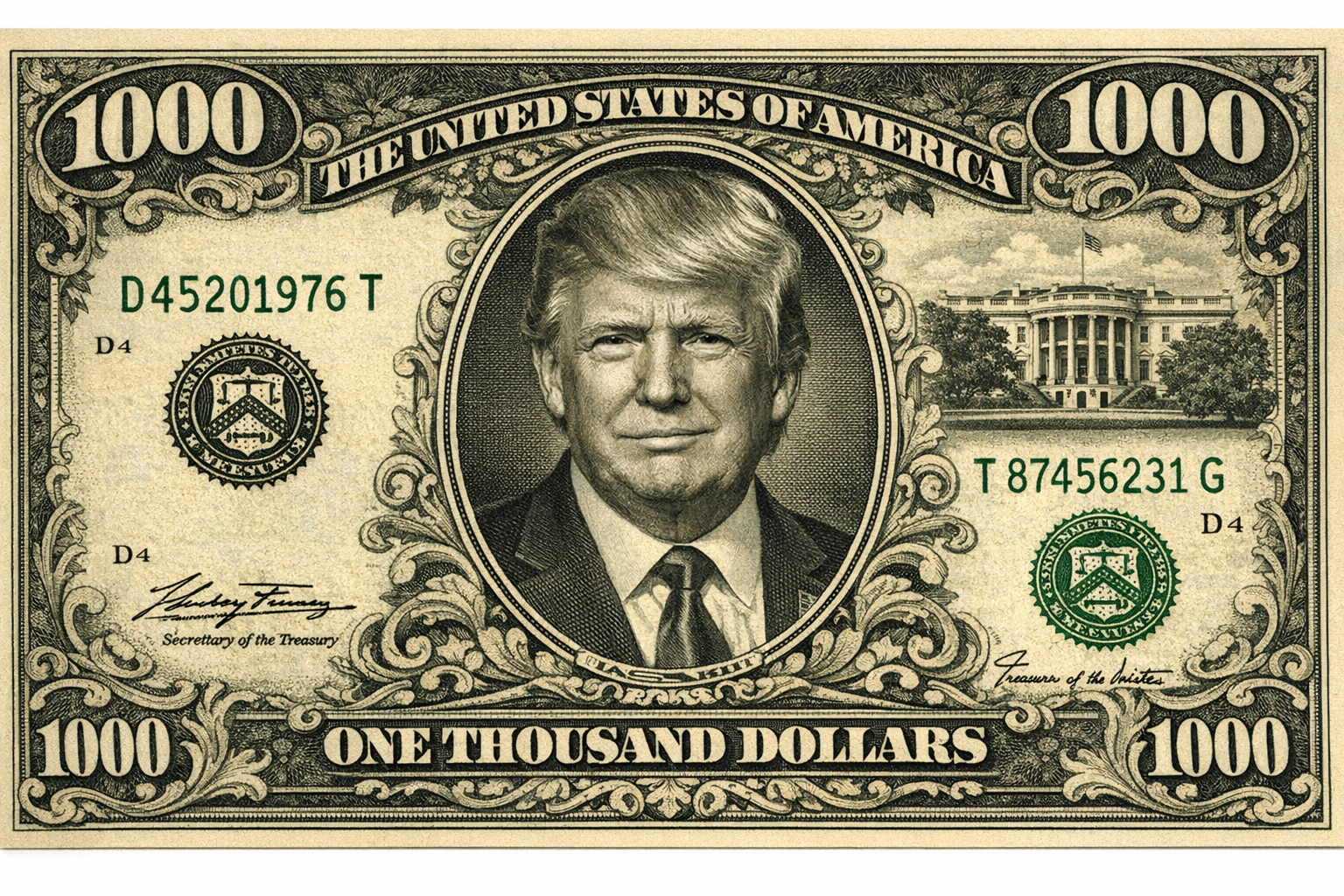
Stick that on your refrigerator and then decide if that’s what you want to trade your assets for.
That’s all for now.
Adam Harding
Advisor | Dad | Potential Future Lobster Fisherman
www.hardingwealth.com